
If you’ve spent time investing in SEO, you’ve probably heard of Google’s EEAT guidelines (Experience, Expertise, Authoritativeness, and Trustworthiness). These aren’t ranking factors in the traditional sense, but they play a powerful role in how Google evaluates content quality and ranks your site.
But now there’s a new player in the mix: AI Overview (formerly known as Search Generative Experience or SGE). With generative AI starting to reshape the search experience, many business owners are asking the big question: Does EEAT still matter in AI-powered search?
The short answer is, “Yes, more than ever”.
In this blog, we’ll explore how Google’s evolving search experience impacts EEAT, why it still matters for your business, and what you can do to stay visible (and credible) in an AI-first search world.
What Is EEAT (and Why Should You Still Care)?
Originally introduced as EAT in Google’s Search Quality Evaluator Guidelines in 2014 and expanded in 2023 with the additional “E” for Experience, EEAT is how Google defines quality.
Here’s the quick breakdown:
- Experience: Has the author lived through or used what they’re writing about? Firsthand experience boosts credibility.
- Expertise: Does the author know their stuff? Are they a qualified expert or skilled in the topic they’re covering?
- Authoritativeness: Is the content creator or brand a recognised voice in the industry?
- Trustworthiness: Can readers trust the information? Is the website secure, accurate, and transparent?
These guidelines are especially important for YMYL (Your Money or Your Life) topics, which are basically content that affects people’s health, safety, finances, or well-being. These include legal advice, medical info, or financial services.
Through EEAT, Google can separate high-quality content from the noise.
Understanding Google’s AI Overview
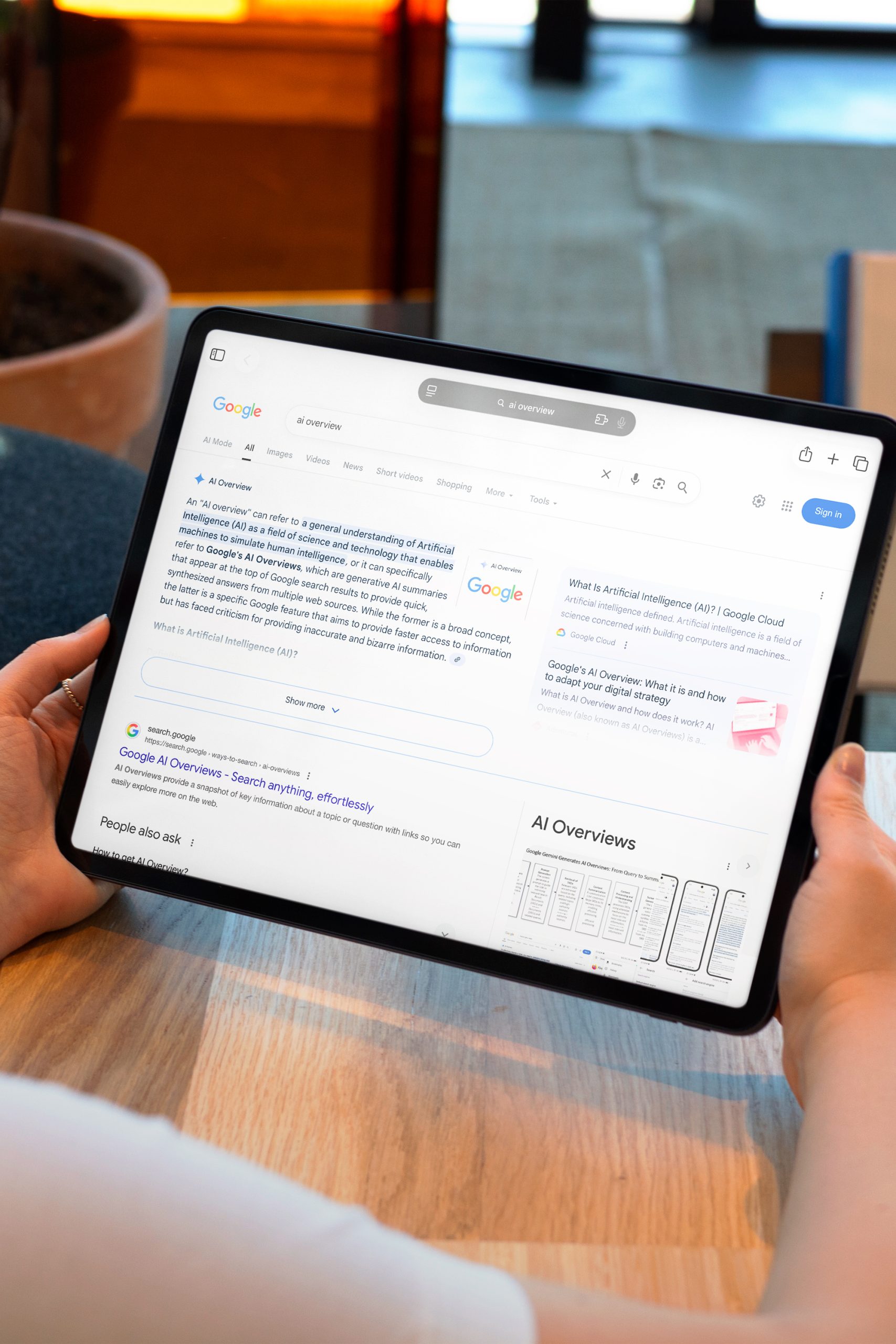
Google’s AI Overview is the new way AI is showing up in search results. Instead of just returning links, Google now uses generative AI to summarise answers directly in search, pulling content from across the web.
This shift changes how your content is seen, but not why it’s surfaced.
In fact, EEAT plays a major role in which sources AI Overview pulls from. Google’s AI models are trained to prioritise high-quality, trustworthy, and helpful content, which is defined by its EEAT guidelines.
So, while AI Overview might reduce the number of clicks to individual sites, it increases the importance of becoming a trusted source that gets quoted or linked within AI-generated results.
How AI Overview Reinforces EEAT
Here’s how Google’s AI-powered search still relies heavily on EEAT:
1. Content With a Clear Experience Gets Picked Up First
AI Overview is designed to reflect the most helpful and reliable sources, and Google explicitly says content that shows firsthand experience will be prioritised. That means reviews, case studies, how-to guides, and personal examples still win.
2. Expert-Led Content Ranks Higher in AI Summaries
If your content is written by people with genuine expertise (or reviewed by them), Google is more likely to trust it and showcase it in AI answers.
3. Authority Is Everything
Google’s systems look at how your website is perceived across the web. Are you cited? Linked to? Trusted by others in your industry? Authority helps you become a “go-to” source for AI Overview snippets.
4. Trust Signals Still Matter
SSL certificates, privacy policies, accurate content, and transparent author bios are all part of building trust. These are factors that both search users and AI look for.
What Businesses Should Do Now to Stay Visible in AI Search
If your goal is to show up in AI Overview and stay competitive in organic search, you’ll need to double down on content quality, not shortcuts.
Here’s what we recommend:
Focus on Helpful Human Content
Write for people, not algorithms. Share what you know. Speak from real-world experience. Offer solutions.
Add Author Bylines and Credentials
Let Google (and your readers) know who’s behind the content. Include bios, titles, and credentials where relevant.
Prioritise Topical Authority
Don’t just write one blog. Build a content hub around your niche. Show Google that you’re a reliable voice in your space.
Optimise for Structured Data
Use schema markup where you can. It helps Google understand your content better. This may also increase your chances of being featured in AI summaries.
Keep Your Site Technically Strong
Fast-loading, mobile-friendly, secure (HTTPS) websites are still foundational to SEO success.
Combining EEAT & AI For A Smarter SEO Strategy
AI Overview might change how content is shown, but it doesn’t change what Google values: quality, credibility, and usefulness. That’s why EEAT isn’t going away. Instead, it’s becoming even more critical.
Think of it this way: AI curates. EEAT qualifies.
If your content is helpful, backed by experience, and trusted in your industry, AI Overview is more likely to quote it, and real humans are more likely to believe it.
Let’s Make Your Website a Trusted Source
At Digital Marketer Bee, we help businesses build websites and content that both rank in search engines and resonate with your target audience’s interests. From technical SEO to content strategy, we combine data-backed decisions with real human insight to get your brand noticed, even by Google’s AI.
Based in Albury-Wodonga, with clients across Bendigo, Wagga Wagga, and regional Australia, we’d love to help you boost your digital visibility.
Want to become the go-to brand in your space? Let’s talk. Book a free consultation with our SEO team today.

Author
Bee bowman
Bee is a digital strategist passionate about helping brands grow through thoughtful design and smart marketing. With a focus on websites, SEO, and paid media, they turn digital spaces into real business results.
Share this post
More insights





Your reviews are now doing more than building trust, and how they’re helping Google decide if you even deserve a seat at the (AI) table.