
On this page
Key insights
Search has never stood still. It’s shifted through updates, new layouts, algorithm changes, and entire waves of innovation. But Google’s newest update, AI Overviews, is one of the biggest leaps we’ve seen in years.
Basically, it changes how results look, how users behave, and how businesses get found. The good news is that once you understand how it works, you can make smart moves that keep your brand visible and competitive.
Here’s what you need to know.
What Are Google’s AI Overviews?
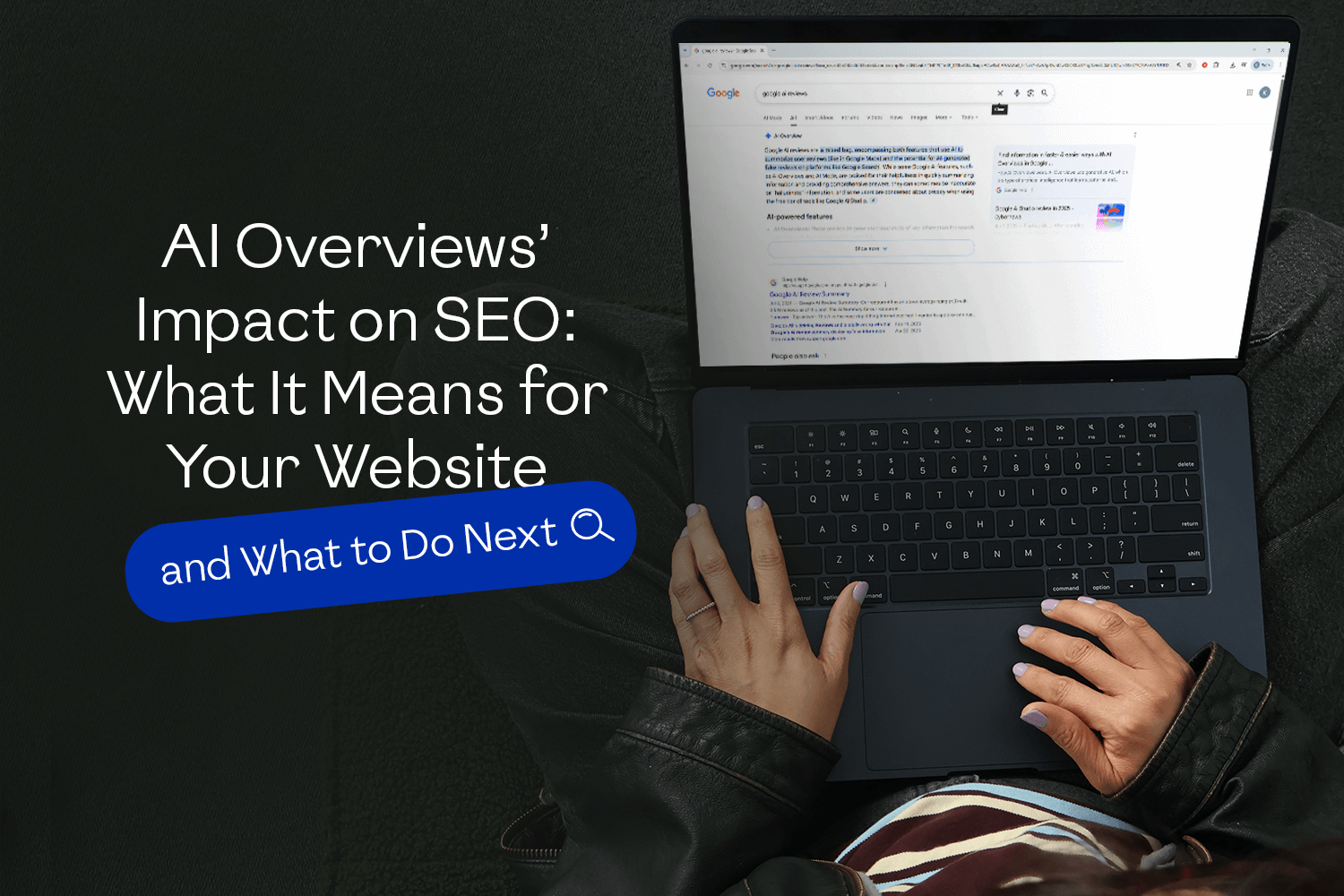
Google’s AI Overviews are the AI-generated summaries that appear at the top of certain search results. They used to be called Search Generative Experience, and now they sit above organic listings and give users a quick, high-level answer to their query.
These summaries often pull information from different websites and give people a simple, fast response.
Understanding Google’s AI Overview
Google’s AI Overview is the new way AI is showing up in search results. Instead of just returning links, Google now uses generative AI to summarise answers directly in search, pulling content from across the web.
This shift changes how your content is seen, but not why it’s surfaced.
In fact, EEAT plays a major role in which sources AI Overview pulls from. Google’s AI models are trained to prioritise high-quality, trustworthy, and helpful content, which is defined by its EEAT guidelines.
So, while AI Overview might reduce the number of clicks to individual sites, it increases the importance of becoming a trusted source that gets quoted or linked within AI-generated results.
Why You Need to Pay Attention to Changes in SEO
AI Overviews have changed everything. They can push organic results further down the page. Also, they can reduce click-through rates because users sometimes feel like they already got their answer, which can deeply affect which pages get traffic.
If your brand does not adjust to this new layout, you risk being pushed out of sight. If you do adapt, you can still get visibility inside the AI summary itself.
The Evolution of AI Search
Google Search has gone through wave after wave of change. Blue links dominated for years, then snippets arrived. Now, we have entered the era of AI-generated answers.
From Blue Links to AI-Powered Summaries
Back in the day, search was simple. It showed ten links, and you clicked the one that looked right. Of course, in order to improve user experience, Google kept adding features to help users find information faster.
But now, AI Overviews bring everything together into a clean summary. Although these AI summaries are fast and helpful, they also mean that businesses need a new approach to stay seen.
Google’s Goal: Faster, More Contextual Answers
Google wants users to stay on the results page longer and get what they need quickly. If people find answers faster, it means Google is doing its job.
For businesses, this means your website needs to offer depth and value, so Google views you as a trusted source.
How AI Overviews Impact SEO
AI Overviews change the way your website interacts with potential customers. Instead of simply ranking on the first page, your content now competes for visibility inside the AI-generated summary itself.
Reduced Click-Through Rates (CTR)
When Google provides a full response on the results page, users often stop there. This reduces the number of clicks even for high-ranking websites.
A strong ranking is still valuable, but it no longer guarantees traffic. Businesses need to accept that AI may reduce visibility for certain queries and adjust strategies accordingly.
Content Citations and Visibility
In AI Overviews, Google cites sources that help build the summary. These citations often appear as small links beneath the answer. Being included here is powerful. Even with lower CTR, visibility in the summary sends trust signals to users and positions your brand as an authority.
The key is creating content that Google recognises as reliable and useful within complex search contexts.
Shift in Keyword Strategies
AI Overviews often cover broad informational questions. Meanwhile, commercial and transactional searches still depend heavily on traditional SEO. This creates a split in strategy.
Informational queries may result in fewer clicks, but high-intent keywords retain strong conversion potential. Businesses must learn to balance both segments and focus more on search journeys, not just isolated phrases.
How to Adapt Your SEO Strategy for AI Overviews
As we’ve been saying, search is changing fast. AI Overviews influence what gets seen, how brands rank, and which sites Google trusts.
Below, you can find practical moves you can follow to stay prepared. Think of this as your updated SEO playbook for 2025.
Show Experience and Expertise (E-E-A-T)
Prove that your team knows its stuff. Add real examples, strong author bios, and content that shows lived experience. After all, Google prefers citing experts.
Optimise for Natural, Conversational Queries
People tend to search as they speak. So, make sure to build content that matches real questions to increase the chance of being used inside an AI Overview.
Use Schema and Structured Data
Schema gives Google more context. It helps the AI understand your content and select your site as a source.
Improve Depth and Readability
Go deeper with your topics, but make sure to keep your language simple. Always remember that clear, structured, and helpful content wins.Diversify Your Traffic Sources
Do not depend only on Google. Add email, YouTube, and social media into your growth strategy. These channels keep your visibility stable even when search changes.
Does Technical SEO Still Matter in AI Overviews?
Technical SEO keeps your website healthy and reliable. It helps your content perform better, load faster, and get picked up by Google. That’s why there are still technical factors that can influence how your site is used in AI Overviews.
Page Speed and Core Web Vitals Still Count
Fast-loading websites offer better user experiences, which is why Google still trusts them more. In other words, having a smooth site gives you a higher chance of being cited.
Make Content Easy for AI to Read
Using short paragraphs, clear headings, and updated data helps Google scan your content more easily before it decides if you’re a strong source.
Case Studies and Early Insights: What the First Wave of Data Is Telling Us
We’re still early in Google’s AI Overview rollout, but the data coming in is already painting a clear picture. User behaviour is shifting fast. Click patterns look different. And brands that relied heavily on traditional organic visibility are feeling the sting.
The good news is that early trends also show where the new opportunities are. When you understand how people are actually using AI-powered search, you can adapt your strategy before your competitors even see the change coming.
Users Don’t Read AI Overviews All the Way Through
According to Growth Memo, 7 in 10 searchers only read the first few lines of an AI Overview. Most people aren’t scrolling. They’re skimming. In fact, users only consume about the first 30% of an AI Overview response before making a decision.
This tells us something huge: in the AI-first search era, your visibility doesn’t just depend on being included in an Overview. It depends on being included at the top.
AI Overview Adoption Is About to Surge
Search Engine Land found that 79% of consumers expect to use AI-enhanced search within the next year. Even if your customers aren’t relying on AI Overviews yet, they will be soon. User behaviour always catches up with convenience.
Brands that optimise early will be the ones feeding the AI answers that their customers end up reading.
AI Overviews Are Pushing Organic Results Down Hard
Botify’s breakdown shows just how much of the page AIOs now occupy:
- 42% of the screen on desktop
- 48% on mobile
That means nearly half of the screen is swallowed before organic links even appear. No wonder sites across industries are reporting drops in organic traffic. It’s not always your rankings slipping. It’s simply that your rankings are now living below the fold.
Real-World Impact: What’s Happening to Brands Right Now
Even large publishers are feeling it. According to DigiDay, News/Media Alliance members used to see 50–80% of their total traffic come from Google. Now? That’s dropped to 20–30%, according to their CEO.
When an industry that massive sees a shift this sharp, it’s a sign that the search landscape has changed at a structural level.
And it’s not just publishers. Some SEO agencies are struggling too, especially those still anchored to old playbooks. Michael King (iPullRank) points out that Google now ranks content based on contextual relevance, not just keywords or backlinks.
The search engine is drawing on AI, vector embeddings, authorship signals and the wider knowledge graph to determine what “belongs” where. Most SEO tools haven’t caught up yet, which is why many traditional methods are producing weaker results.
But here’s the opportunity: This shift means a new generation of SEO practices is emerging. This new version is grounded in entity optimisation, structured content, and genuine expertise.
Case Studies and Early Insights: What the First Wave of Data Is Telling Us
AI will keep shaping how search works. It will shift the layout of results, the type of content Google wants, and how people use search altogether. Although it might seem that the world of search has started its shift toward AI-driven actions, human-led content still remains essential.
Predicting Google’s Next Steps
Google may integrate AI Overviews more deeply into the search experience. It is possible that summaries could replace some snippets, adjust the placement of ads, or change how results are prioritised. Staying adaptive will be essential.
The Role of Human Creativity in AI-Driven Search
AI may summarise, but humans still shape the ideas worth summarising. Thought leadership, storytelling, original research, brand voice, and creative framing will continue to set businesses apart. After all, AI cannot replace genuine lived experience or meaningful insights.
Action Plan for the New SEO Era
There’s a lot happening in search right now. So here’s a clear, simple checklist that shows exactly what you need to do next.
These actions help your brand stay visible in AI Overviews and build a search strategy that works today and tomorrow. Many of these have been covered in an earlier section, but we’ve added a couple of new tips to help you stay afloat in AI search.
1. Strengthen E-E-A-T across your website
As mentioned earlier, highlight your experience and expertise. Add author names, case studies, real examples, and clear evidence that you know your stuff.
2. Target conversational, long-tail queries
Use natural questions and detailed phrases that match how people talk. This boosts your chances of landing in AI Overviews.
3. Add schema and structured data
Give Google more context. Schema helps the search engine understand your pages and choose them as sources.
4. Refresh old content and make it deeper
Update outdated info, expand thin sections, and make your content clearer. Google’s AI leans heavily on fresh, detailed content.
5. Improve page speed and Core Web Vitals
A fast, clean website builds trust with Google’s systems. This increases your chance of being used in summaries.
6. Write content that AI can scan easily
Use headings, short paragraphs, and helpful formatting. Make your content simple for AI to read and quote.
7. Diversify traffic with email, YouTube, and social
Don’t rely on Google for all your traffic. Build owned channels that grow even when search shifts.
8. Keep track of keyword changes and search behaviour
AI Overviews may shift which keywords bring traffic. Review your data regularly and adjust your strategy.
Adapting to AI Overviews with Digital Marketer Bee
Google’s AI Overviews aren’t here to ruin your rankings. They’re here to force a shift. A big one. And the brands that win are the ones willing to rethink how search works, how content is structured, and how visibility is earned.
The good news? We’re here to guide you.
At Digital Marketer Bee, we’re already helping Australian businesses adapt to Google’s AI Mode with clarity and confidence. We don’t fight the changes. We build strategies that work with AI-powered search, not against it. That means smarter content, cleaner structure, stronger entities, and SEO that goes bigger than blue links.
And because AI Overviews won’t capture every click (and never will), we combine it with other traffic strategies that keep your leads flowing even when search feels unpredictable. It’s a full-stack approach designed for brands that care about visibility, authority, and real business growth.
Partner with DMB and you’ll:
- Future-proof your website for AI-driven search.
- Refine your content so it actually gets picked up inside AI summaries.
- Maintain consistent traffic and leads with an integrated, smart-to-the-core marketing strategy.
AI is reshaping the web fast, but your business doesn’t have to fall behind. If you want your brand to stay visible, discoverable, and competitive in this new search era, talk to the team already helping organisations thrive in AI Mode.
Are you ready to future-proof your digital strategy? Get in touch with Digital Marketer Bee today, and let’s build the kind of visibility that survives every algorithm shift, even the AI-powered ones.

Author
Bee bowman
Bee is a digital strategist passionate about helping brands grow through thoughtful design and smart marketing. With a focus on websites, SEO, and paid media, they turn digital spaces into real business results.
Share this post
More insights




Your reviews are now doing more than building trust, and how they’re helping Google decide if you even deserve a seat at the (AI) table.
If you’ve spent time investing in SEO, you’ve probably heard of Google’s EEAT guidelines (Experience, Expertise, Authoritativeness, and Trustworthiness).